Saturday, March 3, 2012

timber rattlesnakes

The timber rattlesnake

Order: Squamata
Subfamily: Serpentes
Family: Viperidae
Subfamily: Crotalinae
Scientific name: Crotalus horridus


Description: The timber rattlesnake, also known as the canebrake or broad banded rattlesnake is a fairly heavy bodied snake that may range in length from 3 to 5 feet.  As a member of family viperidae it has an elliptical pupil and a very distinct arrow shaped head that occurs as a result of the large venom glands located behind the eye.  The top of the head is covered by many small scales which can distinguish it from rattlesnakes in genus Sistrurus which overlap in its range.  It also has a dark stripe running at an angle from eye to jaw, a set of lorial pits located between the eye and nostril (a characteristic of all members of sub family crotalinae) and heavily keeled scales.  The adult pattern and coloration is quite variable, but generally consists of a dark brown to tan or grey dorsal color with dark crossbands that often blend into a very dark or black tail.  Melanism is also seen in the Timber rattlesnakes and it is not uncommon to see individuals that have very dark coloration or are completely black.  The sex of an individual may be determined by the number of subcaudal scales, females having 18-20 subcaudal scales while males have 21 or more subcaudal scales.

Distribution and Habitat: The timber rattlesnake ranges across much of the eastern United States, from northern Florida up to New Hampshire and west to east Texas and southern Minnesota.  Despite this large range, populations are often sparse and isolated as a result of human encroachment.


Timber rattlesnakes are woodland dwelling species that can be found in deciduous and coniferous hardwood forests.  They prefer rocky, uneven terrain and will often make use of crevices in cliffs and ledges.  Gravid females are especially known to spend time on  exposed rock ledges absorbing extra heat and have been known to gather there in numbers.  Timber rattlesnakes are migratory, traveling to a particular winter den in the autumn and then radiating outward from that den in the spring.


Diet and Feeding Strategies:
Timber rattlesnakes feed primarily on small mammals such as mice, rats, squirrels, chipmunks and voles but if given the opportunity they will also prey upon small to medium sized birds, lizards, amphibians and rarely other snake species.

Timber rattlesnakes are sit-and-wait ambush predators whichlocate and target prey using visual, chemosensative and thermosensative mechanisms.  They subdue their prey using complex hemotoxic and myotoxic venom.  However, venom composition may vary considerably both ontogenetically and geographically.  An example of this is the Type A venom composition which is found primarily in the southern populations and posses a particularly strong phospholipase A2 which acts as a neurotoxic component.  As a result, Type A venom has a much lower LD50 value (.92 mg/kg) than the LD50 values of northern populations (6.32 mg/kg).

Reproduction:
Timber rattlesnakes reach sexual maturity between 4 and 8 years, with males becoming sexually mature earlier (4-5 years) than females (6-8 years).  Males seek out the females following pheromone trails that females release during their midsummer shed. Males are also known to engage in mating combat, though these fights are non-violent pushing matches that rarely result in injury.  Females typically reproduce once every 2-4 years with litters that range between 5 and 22 young.  Timber rattlesnakes are ovivipiparous and the young are born with fully functional fangs and venom.


Longevity and Conservation Status: Timber rattlesnakes generally live approximately 20 years in their natural habitat, though captive specimen have been recorded living over 35 years.   Timber rattlesnakes are listed as threatened by the IUCN, and are classified as under “least concern,” but they are listed as endangered in several states including Ohio, New Hampshire, New Jersey, Connecticut and others.  The major threats to extant populations are habitat destruction, organized and market snake hunting and road mortality.


Personal Experience: My encounters with the timber rattlesnake have occurred on the eastern side of Pennsylvania, primarily in Lehigh Valley Gorge state park in Jim Thorpe where there is pristine habitat and a healthy population.  The snakes blend into their environments extremely well so they are difficult to spot and they often may only have a single coil exposed to absorb heat.  All of the timber rattlesnakes that I have encountered have been extremely well-tempered and unaggressive.  If spotted they generally make an effort to flee as opposed to striking.  They are a beautiful species to see in the wild, particularly dark phase or melanistic individuals whose scales often have a velvety appearance.


Links: for more information- http://www.iucnredlist.org/apps/redlist/details/64318/0
http://www.fs.fed.us/database/feis/animals/reptile/crho/all.html
http://www.dec.ny.gov/animals/7147.html
http://www.oplin.org/snake/fact%20pages/rattlesnake_timber/rattlesnake_timber.html
http://www.timberrattlesnake.net/
http://www.dnr.state.oh.us/Home/species_a_to_z/SpeciesGuideIndex/timberrattlesnake/tabid/6777/Default.aspx
http://www.ntrc.tamuk.edu/Snakebook/display_species.php?Scientific=Crotalus%20horridus

Friday, March 2, 2012

Snake Import Ban Upheld

         The article I read on the Sunshine State News website was entitled "U.S. Representative Tom Rooney's Snake Import Ban Backed By Judiciary." The bill by the Republican Congressman sought to ban the import or interstate trade of Burmese pythons and eight other species of snakes, and recently the House Judiciary Committee backed his plan. In a statement Congressman Rooney released on his reasoning for proposing the bill, he stated "“Large, invasive snakes are causing severe damage to Florida’s environment, and they represent a danger to our communities." Rooney, acting in the best interests of his Floridian constituency, is particularly upset about the effect the importation and interstate trade of these snakes has taken on the Everglades. Experts believe there to be currently between ten to one hundred thousand pythons in the Everglades, a fact that they believe is largely attributed to irresponsible pet owners who release their serpentine pets into the wild after they get too big, too hungry, or too dangerous to keep in their house. Under Congressman's legislation, named HR 511, the following snakes will be banned for importation and interstate trade: the Indian python (including the Burmese python), the reticulated python, the Northern African python, the Southern African python, the boa constrictor, the green anaconda, the yellow anaconda, the DeSchauensee’s anaconda, and the Beni anaconda. In a Tuesday statement in support of his bill, Rooney cited 15 human deaths that have occurred as a result of the importation and introduction of these large snakes into the Florida Everglades and the near extinction of several small mammals that have not evolved in the presence of python predators, as the prey had not developed in the presence of this newly introduced set of predators, so they were not evolutionarily prepared. In addition, Rooney's proposed bill was very favorably supported by the ASPCA, or The American Society for the Prevention of Cruelty to Animals. Nancy Perry, senior vice president of ASPCA Government Relations, stated in a press release that “passing HR 511 would mark a significant achievement for the welfare of these snakes, for the protection of our native species, and for the safety of our communities."


http://www.sunshinestatenews.com/blog/us-rep-rooney%E2%80%99s-snake-import-ban-backed-judiciary

Herps in the News


The article I read is called Robot Reptile "Released" into Wild to Aid Breeding Research and I found it on the National Geographic site. This article discusses research that is being conducted on the Tuatara in New Zealand where researchers are interested in how male Tuatara establishes dominance which consequently leads to reproductive success. In order to study the aggression between males and how they maintain their reproductive fitness among females, postdoctoral student Jennifer Moore worked with Weta Workshops to build a robotic male model of a Tuatara. This model has allowed for the researchers to manipulate behavioral responses in this model to understand how male Tuataras compete for a mate. Ultimately, this model will allow the researchers to see which males are winning the dominance fights and as such breeding with the females. Jennifer Moore believes her data will reveal a correlation between competitive success and reproductive success in the Tuatara male population. Also, the information they obtain from the model they hope to use in captive breeding programs and Tuatara translocation.  The model was cast from an actual Tuatara male that had died in captivity so the body size and dimensions would be highly accurate. The researchers spent five weeks on Stephen Island near New Zealand utilizing the model and catching on camera the reactions and behaviors of other Tuataras towards the robotic Tuatara. They find interesting results in which the robot would need to be modified in order to act more like a male Tuatara instead of a female. The original body signals they had built into the robot had been more female in nature than male. But, luckily they have learned a lot about the challenges the males face when competing against each other. However, there is still a lot the researchers don’t know and hope to discover through time using this model and observation data along with quantitative data.

            I think the utilization of a robotic model to understand Tuatara’s behavior in competition and in reproductive success is an excellent idea because the author of the article mentioned that 95% of the time Tuataras sit motionless so the use of a robot is perfect for this species. The robot can remain motionless until approached by another Tuatara and then can respond according to how the researchers control the robot’s mechanisms. This set up has a realistic aspect to it which can help yield accurate data. Also, the fact that the researchers had the model cast from a Tuatara specimen adds to the naturalism of the experiment. The only problem I had is if the male Tuatara they took the cast from had a size and shape that would make it a very dominant male type or only an average male type. I know that body size and shape can play a role in dominance between males and the article never discussed it. It would be interesting to find out if the model’s size and shape inhibited the researcher’s exploration into male competition. Also, the fact that the Tuatara’s don’t have expected patterns of commitment when mating could complicate the researcher’s objective of picking apart reproductive success in males. They will probably have to account for how female behavior may affect a male’s reproductive success past just the male to male interactions. I predict that this experiment will take a lot longer than intended because more problems will probably arise with the Tuatara’s behavioral responses. Also, how Tuatara use their sensory systems may affect the experiment because they may be able to tell the robotic Tuatara isn’t like them. This may change how the male Tuatara’s interact with the robot which could cause potential research problems. Overall I think robotics are the future not only in research but helping to preserve species migratory patterns and even protecting endangered species from harm. I think with every experimental design adjustments can always be made to improve the results.  

http://news.nationalgeographic.com/news/2007/06/070606-robot-reptile_2.html  


This picture shows postdoctoral student Jennifer Moore with the robotic male Tuatara. 


Thursday, March 1, 2012

Green sea turtle - natural history

Green sea turtle (Chelonia mydas)

Description and life history:  Green sea turtles are large and long-lived marine turtles.  Adults reach masses of up to 500 pounds, with most in the 240-420 pound range.  Their average carapace length is about 40 inches.  After hatching the color of the carapace and limbs is usually dark brown or black with a white lining.  The coloration of adult carapaces is variable and ranges from light brown to dark olive, sometimes incorporating yellow streaks, and their plastron is whitish to dark yellow.  The carapace is wide and smooth, and has large scutes that do not overlap.  Each flipper possesses a single visible claw.

Green sea turtles were named because the layer of fat beneath their carapace is green due to the algae they consume.  They can be most easily distinguished from other sea turtles because they have a single pair of prefrontal scales (in between the eyes). 

Green sea turtles are they only herbivorous sea turtles as adults.  As juveniles they are omnivorous and may eat jellyfish, crustaceans, etc. in addition to the grasses and algae that is typical of the adult diet. 

The lifespan of green turtles can reach over 80 years in the wild.  Reaching sexual maturity is a slow process lasting 10-40 years, with an average of 25.  It is believed that female green sea turtles exhibit natal homing by returning to the beach at which they were born to nest.  These migrations from feeding to nesting grounds may be upwards of 1,000 miles.    

Green sea turtles lay about 115 eggs per clutch on average (only at night), and then leave the site.  The incubation period of the eggs is about 60 days.  Sex determination is temperature dependent, with males generally determined by lower temperatures and females by higher ones.  Green sea turtles return to nesting sites every two to three years and lay up to six clutches per nesting season.
 
Location and Habitat:  Green sea turtles are found worldwide in tropical and subtropical marine waters.  When not migrating they prefer relatively shallow water in reefs, bays, or inlets.  Such areas containing high levels of grasses and algae are most frequented.         


Personal Experience:  I have witnessed green sea turtles on several occasions while snorkeling reefs and seagrass off of Saint John, USVI.  I came across them mainly in the more protected bays.  I saw the majority of them over seagrass as opposed to reef, although sometimes sand was the dominant substrate in the area.  At times I was in the vicinity of multiple green sea turtles, once being able to see four directly in front of me.  Often these turtles were fairly stationary, as opposed to the hawksbill turtles I saw that moved at a much greater rate and were more solitary.

My latest encounter with green sea turtles was in Port Aransas, Texas in February.  They have a long jetty which is frequented by young green turtles and I saw one rise to the surface twice.  Also, I was given a tour of an animal rehabilitation keep which had a handful of green turtles, including one brought in that day because it was nonfunctional due to cold shock.

Green sea turtle I saw off the coast of Saint John, USVI - late December 2010

Green sea turtle showing the diagnostic pair of prefrontal scales in between its eyes - yoto98.noaa.gov

Green sea turtle hatchling - thrivingoceans.org

Links: for more information - http://earthtrust.org/wlcurric/turtles.html
http://www.fpir.noaa.gov/PRD/prd_green_sea_turtle.html         http://www.fws.gov/northflorida/SeaTurtles/Turtle%20Factsheets/green-sea-turtle.htm
http://animals.nationalgeographic.com/animals/reptiles/green-turtle/
http://www.conserveturtles.org/seaturtleinformation.php?page=green
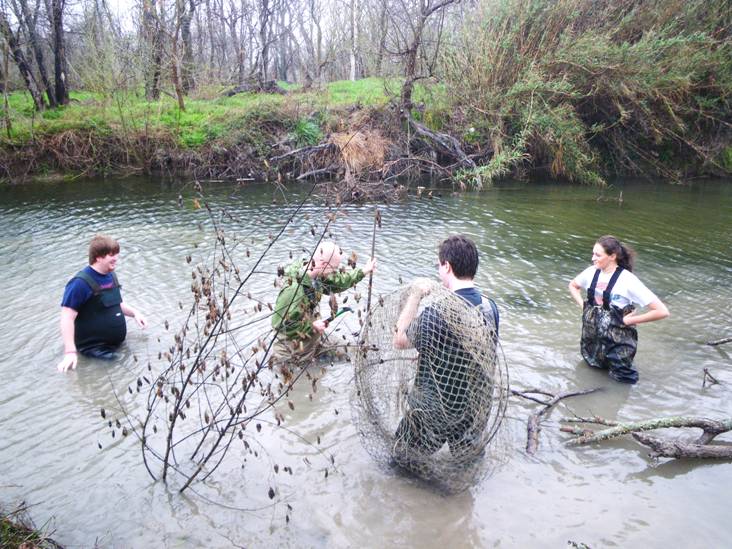
Our turtle-trapping field trip this week was very successful!  We caught two species, along with a new lizard on the walk back to the lab. 


We have had Acris calling for about a week now, and found our first clutch of amphibian eggs yesterday (probably Rana berlandieri, but we're waiting to find out for sure).