Monday, April 6, 2015

Sea Snakes in Northern Europe: Jormungandr

The myth of the sea monster, in particular the sea serpent, is one that most people are passingly familiar with. Sea serpents are found in almost all European and Middle Eastern mythological canons, ranging from Ancient Sumeria to Scandinavia. This is somewhat surprising, given that the current range of sea snakes (all belonging to the family Elapidae) is limited to the Indian and Pacific oceans. However, myths generally describe sea snakes as being enormous and finned, indicating that the myth of the sea snake is likely based on oarfish, eels or even large invertebrates like giant squid, rather than actual marine snakes.

One sea snake character that has been fairly well-preserved is Jormungandr, a feature of several Norse myths. Jormungandr is the child of the famous trickster Loki and the female giant Angrboda, along with Fenrir, a gigantic wolf, and Hel, the goddess of the underworld Niflheim. (How two apparently humanoid beings produced a giant snake and a giant wolf is not explained.) Odin, the Allfather, discovers Jormungandr as a small child and throws him into the sea. While living there, he grows so large that he can encircle the earth while still having room to bite his own tail. He is further described as having enormous fangs and dripping with venom.

A depiction of Jormungandr from a 17th century Icelandic manuscript. The drawing shows Jormungandr with arms and a dragon-like head, despite referring to him as a "serpent" in the text.

Jormungandr features in a few of Thor's adventures, usually as a foil to prove Thor's strength and bravery. The most popular depiction of Jormungandr shows Thor attempting to catch him and behead him, as in the drawing above. Most memorably, he is destined to battle Thor at Ragnarok, the end of the world. Thor will eventually succeed in beheading him, but Jormungandr will bite Thor, who in turn will collapse and die after taking nine steps. After the conclusion of the battle, Earth is destroyed, but a new, pristine Earth arises from the ashes. (A full translation of Jormungandr's origin can be read here, and an account of Ragnarok can be read here.)

Jormungandr's portrayal is interesting because it has links to both the negativity typical to Judaism and Christianity, while also being an example of ouroboros, the snake eating its own tail. Judaism's creation story includes a longtime feud between humans and Satan in the form of a snake; this parallels the story of Jormungandr and Thor's final battle, suggesting that the battle may have been a post-Christianization addition to the canon. On the other hand, the imagery of ouroboros is usually associated with cycles of destruction and rebirth. Pre-Christian Norse myth is deeply cyclical, and contains many motifs of rising from the ashes of destruction. The association between Jormungandr's death and the remaking of the world suggests that the ancient Norse did not view snakes in a negative light; rather, they associated them with rebirth after trials, and ultimately considered them positive symbols.

Hopefully, Jormungandr's real-life equivalent will not have cause to rise from the deep any time soon. In meantime, we can all be glad that actual sea snakes are not long enough to stretch around the world.
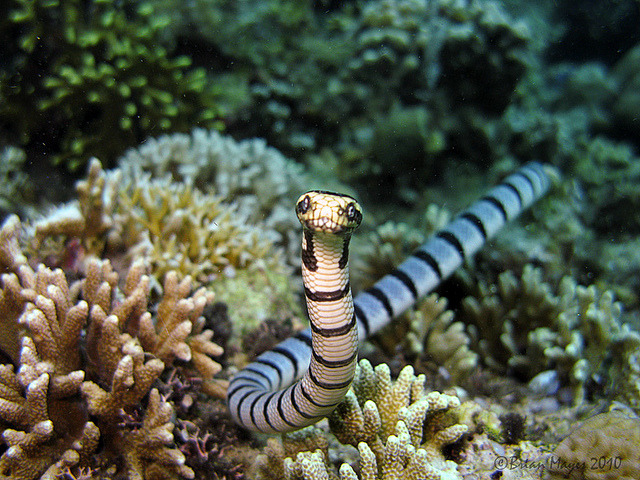
Pictured: probably not Jormungandr.


Sunday, April 5, 2015

Natural History: Central Newt

Central Newts, both male and female, along with a tadpole
Notophthalmus viridescens, commonly referred to as the central newt, is a common inhabitant in the swamplands and woodland ponds of the South. As we explored the area next to the Francis Marion National Park, we searched through the swampy waters and were rewarded with these great creatures. 

Female Central Newt
This gorgeous beauty is a voluptuous adult female. This is evident in her slender hind legs and her lack of a saddle seen on her belly. The central newt is distinguished by its olive green to olive brown dorsal color which is sharply cut off by its bright yellow venter (belly). Similar to the Red-spotted newt, but it is lacking in a very important characteristic: red spots on its slender body. It is probably the beginnings of the breeding season, she is very plump. Most likely this plumpness is from a large amount of eggs she is carrying in preparation for mating. The moist, warm habitat of the swamp is a great location for this female. The newts like to roam around on the leaf litter in the murky water. In this aquatic stage, the newts consume zooplankton, fish eggs, and even amphibian and anuran larvae.

Getting the chance to help survey this area and uncover what species call it home was immensely satisfy and exciting! The opportunity to clamber over fallen logs searching for reptiles and wading through the swampy waters dip netting for amphibians was amazing. Every semi-permanent pond was a wonderful mystery. Collecting each trap held an air of anticipation as they were lifted out of the water and searched for the tiny creatures we rarely get the chance to see. 


Article Review: Wetland Conectivity: How Fully Aquatic Species Reach Isolated Wetlands by: Ben Sagara

I have always been interested in wetland management, and specifically the effects of development on wetland ecosystems.  After our recent literature discussion from class I decided to follow up by doing some wetland research.  I came across a few interesting studies, but I found one to be particularly intriguing.   Christopher M. Schalk and Thomas M. Luhring conducted a study published by The Society for the Study of Amphibian and Reptiles that assessed the vagility (the ability for these salamanders to disperse) of 2 fully aquatic salamanders; the Greater Siren and the Two-Toed Amphiuma in two semi-permanent shallow water ponds on the Department of Energy's Savannah River Site in Aiken, South Carolina.  The researchers observed that these fully aquatic species were prevalent in an array of isolated wetland in the Southeastern region.   Many previous studies have investigated the vagility (dispersal mechanisms) for many terrestrial and semi-terrestrial species, but there is little knowledge as to how fully aquatic species reach isolated wetlands.  Dr. Schalk and his team set out to capture both Greater Sirens (Siren lactertina), and Amphiuma (Amphiuma means) around their study sites in Akin, South Carolina.   They subjected each individual (N=55, but they caught many more Siren than Amphiumia) to one of thee treatments to assess vagility.  They predicted that these species disperse to near by wetlands during heavy rain and flooding events.  To test their dispersal (vagility), salamander distance was measured as they traveled through varying levels of water (3 treatments).  The first treatment had almost no water, while the last treatment had 5 cm, which was enough for the salamander to be submerged.   


The study showed that both aquatic salamanders have trouble dispersing significant distances under very moist and shallow standing water conditions, traveling fewer than 10 m.  Under fully submerged conditions however, vagility increased significantly, with some individuals traveling over 40m.  The fact that fully aquatic species persist in an array of isolated wetlands suggests that there are some corridors through which even fully aquatic species can disperse.  The results support the assumption that heavy rains and flood events are the conditions needed to create these ephemeral corridors that aid in the vagility of aquatic species.  A lesion can be learned as increased development, for example, building roads, power lines, and plumbing, all create potential blocks to these ephemeral corridors.  Much of this infrastructure seems negligible, but they create obstacles to large for many species to overcome.  They block gene flow and isolate adjacent populations, which lessons variation among the populations through a process called habitat fragmentation, which weakens the overall health of the populations.

We must maintain landscapes that protect these ephemeral corridors and enhance periodic wetland connectivity so that we can reduce the loss of local populations of aquatic species in wetland ecosystems.   Our infrastructure should not alter the dynamic flow of the natural processes that exist, but should account for the immigration and emigration of meta-populations within their natural environment.   


Balto the Great

Some have met him. Some have only heard of him. Some will go their whole lives without even knowing he existed. I am of course talking about the man, the turtle, the legend: Balto. Balto was swimming along in his pond on The College of Charleston’s Dixie Plantation when he smelled something delicious—could it be? The delicious scent of canned fish could be found wafting out of this great rope hammock. Balto approached cautiously and against better judgment lunged at the snack.  All was well until he had his fill and tried to leave the “hammock” for the spacious waters of his pond and, gasp, he could not! He was trapped, and what started as short foray into a lunch filled hammock turned into a day-long saga of fear, acceptance and discovery.
Balto in all his glory (and perhaps fear). 
If you haven’t heard of Balto he is the adult (most likely male) yellow-bellied slider (Trachemys scripta) that graced us with the pleasure of his company on one of our field trips. Yellow-bellied sliders are a subspecies of pond sliders that thrive in freshwater ponds. Female yellow bellies are larger than their male counterparts and get about 11 inches long while males are usually a measly 8 inches. Balto and his brethren are an omnivorous bunch that will pretty much eat anything they encounter during their pond life and are usually fed lettuce and small meats when kept as pets. Yellow bellied sliders incubate their eggs for about three months and can have clutches that range from 10-12 eggs. Like most herps, their clutch size will vary with their size.


Like where we found Balto, yellow bellies prefer ponds and other muddy, permanent waters with lots of sunshine and a bounty of aquatic vegetation. Balto became an adult between the ages of three and five and generally breeds between March and July. Although my time with Balto was brief it was exciting to get to meet such a majestic creature with such beautiful claws. We let him go back into his pond and I believe he was caught again by our Thursday lab. Maybe one day when I’m an alumnus our paths will cross again at Dixie Plantation!

Chelsea Snipes and Emerald Todd holding Balto the yellow bellied slider. 

"Deadly snakes 'milked' to create potent new anti-venom"

As I was browsing the various news circuits available online, I came across an article on Yahoo that peaked my interest. Titled "Deadly snakes 'milked' to create potent new anti-venom," the article details a new push in research in the Alistair Reid Venom Research Unit at the Liverpool School of Tropical Medicine for more effective anti-venoms in Sub-Saharan Africa.
The article's author, Matthew Stock, interviews Dr. Robert Harrison who is spearheading the research project in question. Dr. Harrison brings to light the shocking reality that is the lack of adequate healthcare in Africa by explaining that over 32,000 people die yearly from snakebites and 100,000 survive these bites, but are disfigured or disabled because of the damage from the venom. Dr. Harrison has accrued 21 species of venomous snakes native to Sub-Saharan Africa (including the Spitting Cobra, Puff Adder, and Source Scale Viper) and is "milking" them to hopefully create anti-venoms (I must admit that the thought of milking an animal that in no way has mammary glands or even feeds their young after birth sounds a little gross to me, but I understand that it is just a term for extracting the venom from their fangs).
Awesome picture I found of the Spitting Cobra:

The anti-venoms that are currently used in the Sub-Saharan Africa are used for all snake bites but are not very effective. Stock explains that, in order to get anti-venom, animals (he mentions horses and cows) are given a small dose of venom and then their natural antibodies are harvested from their blood. The problem is that the amount of antibodies produced is too small to make a particularly potent anti-venom. Since they are not very potent, many doses are needed at $140 USD per dose. Stock points out that the families needing the medicine only make about $1 a day, obviously not enough to afford treatment.
Dr Harrison intends to take a new approach to creating broad-spectrum anti-venoms that is dubbed "antivenomics." They pick out the specific proteins that are unique to each species of snake's venom and add those proteins together with the existing anti-venom (used effectively in Nigeria) to create a comprehensive anti-venom. Combined with a more cost-effective production process created in Costa Rica, the anti-venoms that Dr. Harrison and his team hope to make will be more accessible and effective in Sub-Saharan Africa. They also hope to add molecules to the serum to allow for the antivenom to be stored at "ambient temperatures" instead of requiring refrigeration which is a scarcity in the heat of Sub-Saharan Africa.
Since this is Yahoo News, the audience that Stock is pitching to is obviously not as medically or herpetologically-minded as say people who read scientific journals so I understand why he didn't go into depth about the processes of isolating proteins etc. etc, but I do want to know the specifics. What is this newer and cheaper production process in Costa Rica? How do they combine proteins and get an effective anti-venom? What species are of most concern? I guess I'll have to go hunting to find out for myself!


Link to article: http://news.yahoo.com/deadly-snakes-milked-create-potent-anti-venom-203845320.html

Time to feed: How diet, competition, and experience may influence feeding behaviour and cannibalism in wood frog tadpoles

The researchers began this study describing anuran tadpoles as “eating machines”. Because tadpoles are born in wetlands, they have to be capable of adapting to varying conditions. These habitats are subject to changes such as drying out and inherently have varying food availability for tadpoles. These conditions make it a challenge for tadpoles to survive to adulthood. One option for tadpoles is to use cannibalism as a way to increase their chance of survival by reducing competition and providing a food source. Even though cannibalism increases food availability for tadpoles, it also increases their chance of getting diseases.

Wood frog tadpoles, Lithobates sylvaticus, are known to be efficient predators of amphibian larvae, including their own, even though they lack the morphological characteristics seen commonly in cannibals. The researchers in this study aimed to provide knowledge on the proximate causes of cannibalistic behavior in larval amphibians by examining if wood frog tadpoles cannibalize based on specific dietary cues and competitors. The wood frogs used in this study were collected as eggs from wetlands in Canada. The experiment consisted of placing the wood frog tadpoles in containers and tested for different feeding initiation times. Tadpoles were presented with varying conditions of presence/absence of competitors, chemical cues, and various diets such as high and low protein content.

The results of this study showed various eating habits in wood frog tadpoles. Tadpoles responded differently to diets over time, but consistently showed reduced feeding when competitors were present. When tadpoles were presented with specific diets, the response time to conspecific tissues declined. The wood frog tadpoles had the shortest feeding initiation time to brine shrimp, conspecific tissues combined with chemical cues from brine shrimp, and conspecific tissues combined with chemical cues from cornmeal. Wood frog tadpoles had the longest response time to a diet of cornmeal.

This study showed that wood frog tadpoles have the inherent ability to adjust their feeding responses, which helps increase their fitness. The results supported the researchers’ hypothesis that wood frog tadpole cannibalism is affected by chemical cues in their diet and the presence/absence of competition. The authors believe that the tadpole’s sensitivity to competition may lead to aggressive behavior from tadpoles, which can result in intraspecific predation. Because this behavior limits tadpole population density it provides a “profitable” diet to established larvae.

I think that this research is very important to the field of herpetology because it presents further evidence to our understanding of why tadpoles cannibalize. As the authors state, cannibalism impacts the population density of wood frogs and therefore is important to understanding their life history. The research presented in this article helps us further understand the plasticity tadpoles show with cannibalism. I thought that this study provided interesting data on what prompts tadpoles to cannibalize and shows people an interesting behavior found in the animal kingdom.

Jefferson, D. M., Hobson, K. A., & Chivers, D. P. (2014). Time to feed: how diet, competition, and experience may influence the feeding behaviour and cannibalism of wood frog tadpoles (Lithobates sylvaticus). Curr Zool.


Tell-Tale Blue Tail


When replaced a marbled salamander that I had found earlier to the log that I had found it underneath, my friend and I decided to look the skink that had eluded us the first time we searched for it. By shifting some detritus away from the edge of a log, I was able to spot the tell-tale blue tail of the skink. With the help of my friend, we were able to keep track of it long enough to see it start climbing a tree. While she attempted to corner it from the other side, I was able to cup my hand around it while it was clinging to the trunk of the tree. Upon closer examination I learned that it was a Southeastern Five-Lined Skink (Plestidon inexpectatus) of the Scincidae family. This species is identified by 5 distinct narrow lines down the torso. We could tell this one was a juvenile because it still had the 5 narrow orange stripes along it's face and a distinct blue tail. In order to distinguish this species from its sister group the Five-Lined Skink (Plestidon faciatus), we looked under the tail. The scales were all about the same size which is consistent with the Southeastern version. This little guy was very fast and very small, about 3 1/2 to 4 inches long. He scampered along the ground at first and then climbed up onto a tree. When trying to show him off to my classmates, he was very mobile, trying to squirm away. As soon as I returned him to the log I had overturned he quickly ran under the detritus and disappeared.